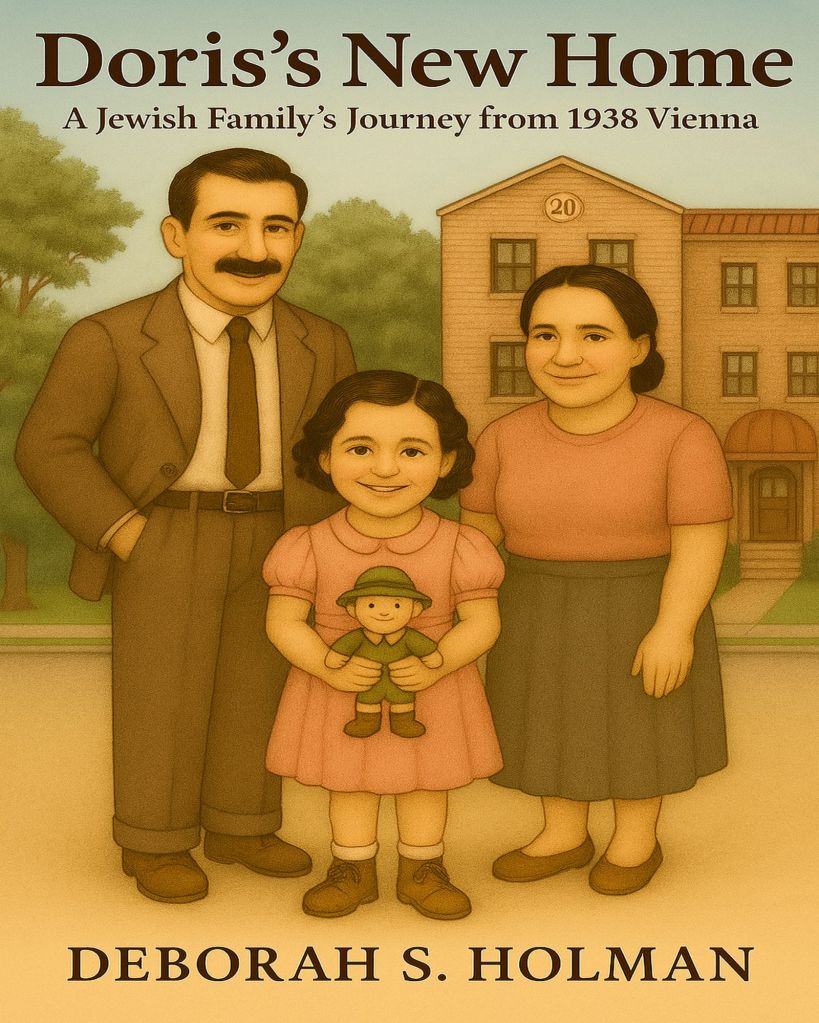
When I first started working on Doris’s New Home—the illustrated children’s companion to my novel Nothing Really Bad Will Happen, about a young Jewish girl fleeing Vienna in 1938—I didn’t expect to have so many sleepless nights over the pictures.
Words? Sure, I know how to choose a verb, tighten a paragraph, untangle a timeline. But the images? That’s where the guilt crept in. And stayed.
From the beginning, I struggled with how to illustrate this book in a way that would feel authentic, respectful, and emotionally resonant—especially given the deeply personal subject matter. The story is based on my own mother’s life. These are my people. This is our history.
But here’s the thing: I couldn’t afford to hire a professional illustrator. Not for twenty-plus full-color spreads. Not for a project that might (let’s be honest) sell a few hundred copies if I’m lucky. I’m a writer and genealogist, not a publishing empire.
Still, I couldn’t shake the guilt. If I used AI-generated images, would I be taking work away from a human artist? Would I be feeding the machine that’s already making it harder for illustrators to earn a living? Would I be—God forbid—cheating?
And then there was that image. A generated scene of my great-grandparents in the belly of the cargo ship, the Serpa Pinto. When I saw it, my heart sank. It was too close—uncannily close—to a well-known photo of Elie Wiesel taken at Buchenwald. Not identical, but clearly inspired by it in a way that felt wrong. Unintentional, but wrong. I scrapped it immediately.
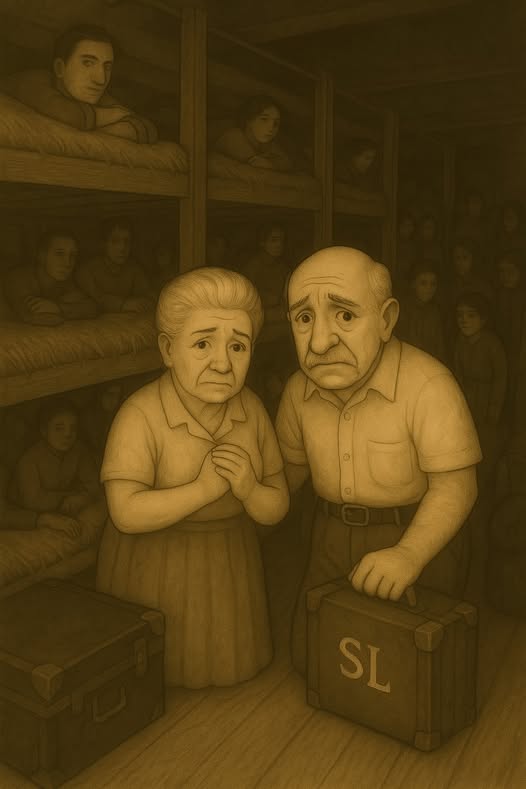
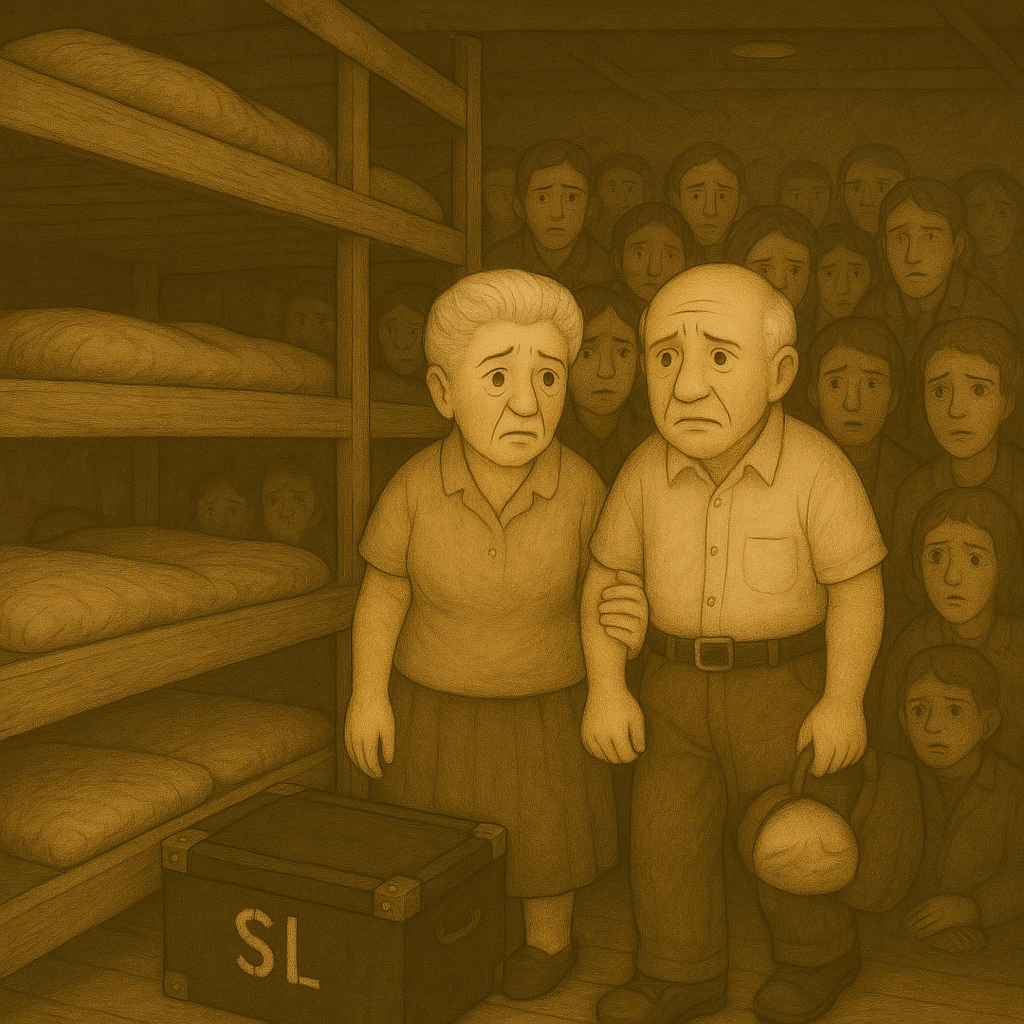
I kept circling the same questions. Who owns an image generated by AI? What if the model was trained on someone else’s copyrighted work? How do I honor the very real story I’m telling—without stepping on someone else’s?
Eventually, I found my way to a kind of peace. Not perfect, but honest.
First, I made a decision: I would not ask the AI to invent anything out of whole cloth. Every image in Doris’s New Home is based on real materials—family photos, vintage postcards, period objects I described in detail. The tea set on Omi’s table? That’s actually my great-grandmother’s hot chocolate set. The hat shop in Vienna? That’s based on a photo of the real storefront. And that doll Doris holds on the cover? It’s my mother’s favorite childhood doll—a Seppl doll—yes, I did the research.
I even toyed with the idea of merging my two hobbies—staging scenes with my miniature dollhouse figures and family heirlooms—but the logistics (and lighting!) quickly talked me out of it.
Second, I decided to treat this process like any other form of digital illustration. Graphic artists today don’t always paint with oils and watercolors—they use Procreate, Photoshop, Illustrator. The tools are different, but the art is still theirs. I’m using AI as a tool. But the vision? The historical accuracy? The emotional tone? That was all painstakingly directed—by me.
And, let’s be honest, this method let me move fast. I’ve been able to revise images to match character continuity, adjust facial expressions, scale everything to 8×10 at 300 DPI (trust me, I now dream in DPI). I’ve swapped out outfits, softened the lighting, and cleaned up all sorts of nonsense—suspicious-looking strangers, random background lurkers, and more than one disembodied head hovering where no head should ever be. It’s iterative, detailed, and collaborative—just not with a human artist on the other end.
The Goldilocks Test: One Scene, Three Tries
Creating Doris’s New Home with AI-generated illustrations wasn’t about “plopping in” a picture and calling it done. It was more like directing a play where the actors show up looking half-right, and you have to coax them into their roles—gently but firmly.
Take this emotionally charged scene: Paul returns home after 10 months in a concentration camp. It had to land just right—and that took work. A lot of work.
Too Cartoony:

Version 1: Technically polished, but emotionally off-key. Everyone’s grinning like it’s a birthday party, not a homecoming from the camps. The mood didn’t match the moment.
Too Scary:
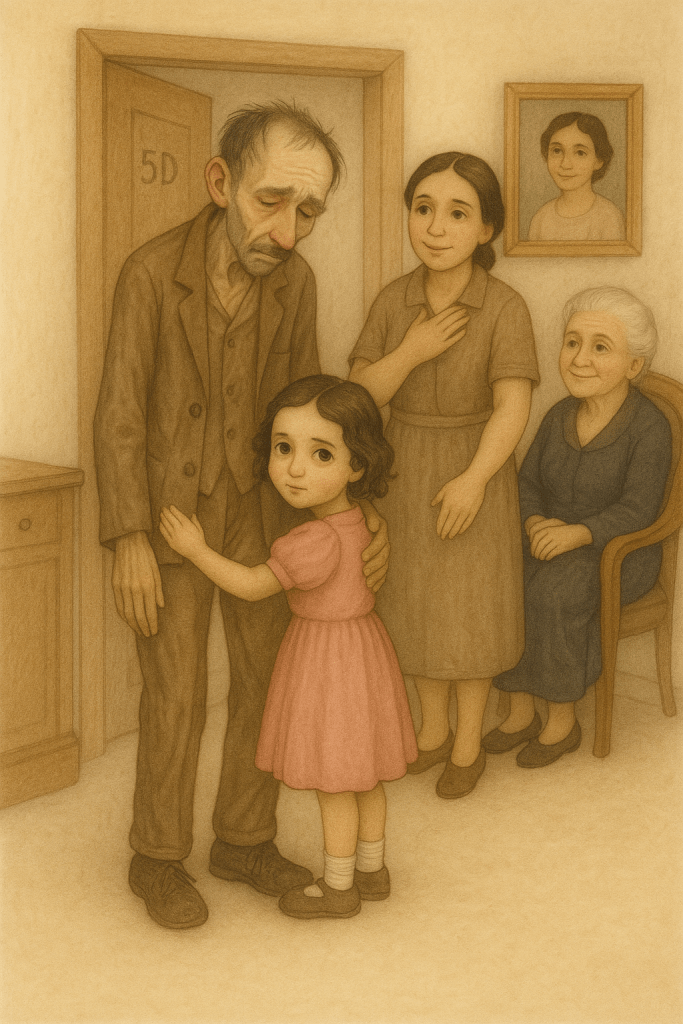
gaunt and haunted
Version 2: This one went too far. Paul looks skeletal, more like a ghost than a father. The expression on Doris’s face feels out of sync, and the emotional tone is unsettling rather than moving.
Just Right:
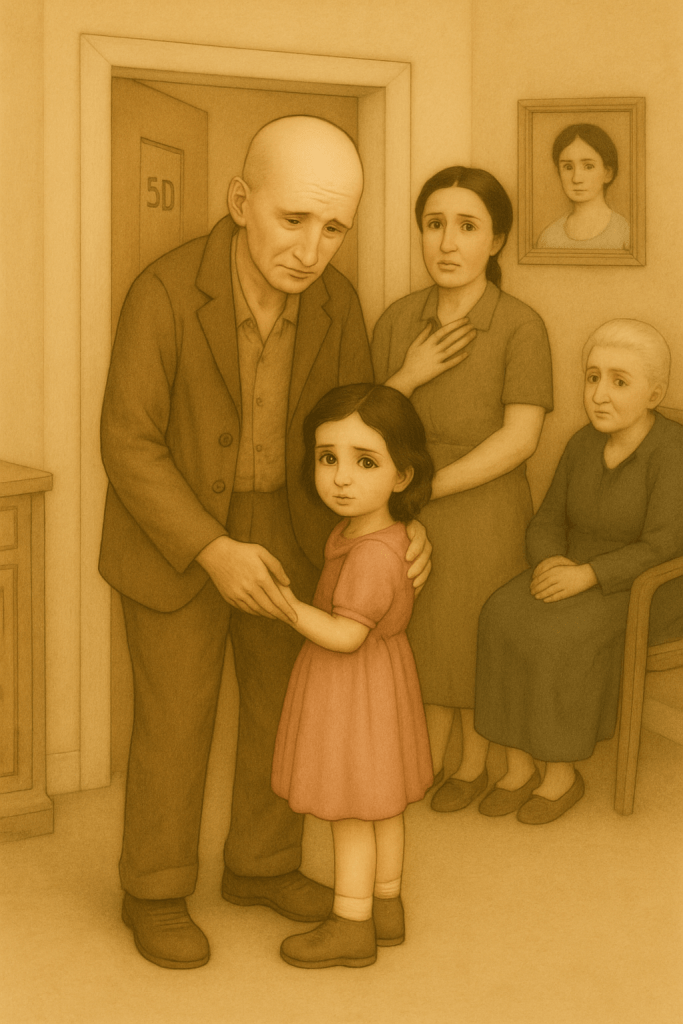
Final Version: Subtle sadness on Paul’s face, a hint of hesitation in Doris’s body language, and the quiet support of the family in the background. It felt real. This was the one.
Full disclosure: I actually created 19 iterations before landing on just the right one!
I still worry what others—especially illustrators, authors, or even buyers—might think. That I took the easy way out. That I cut corners. But the truth is, I wrestled with every decision. I didn’t choose this path lightly. I chose it because I wanted this story to be told now—while my grandchildren are still young enough to curl up with it and understand that it’s part of their story, too. I refused to let budget be the thing that kept it from being told.
Would I have loved to hire an illustrator? Of course. But sometimes the choice isn’t between AI and a human. It’s between AI and nothing at all.
This little book exists because I had the tools—old and new—to bring it into the world. And I don’t take that lightly. In fact, I hope Doris’s New Home can spark conversation not just about history, but about how we tell it—and who gets to.
Am I still a little squeamish? Sure. But I’m also proud.
And grateful.
And nearly ready to send this story—illustrated, revised, stitched together with love—into the hands of readers.
Especially the tiny ones.

 deborahsholman.com
Leave a comment