DISCLAIMER: I am not a lawyer. The information I share here is gleaned from my experiences and various sources I have consulted. Copyright law varies by country—always double-check your own country’s rules.
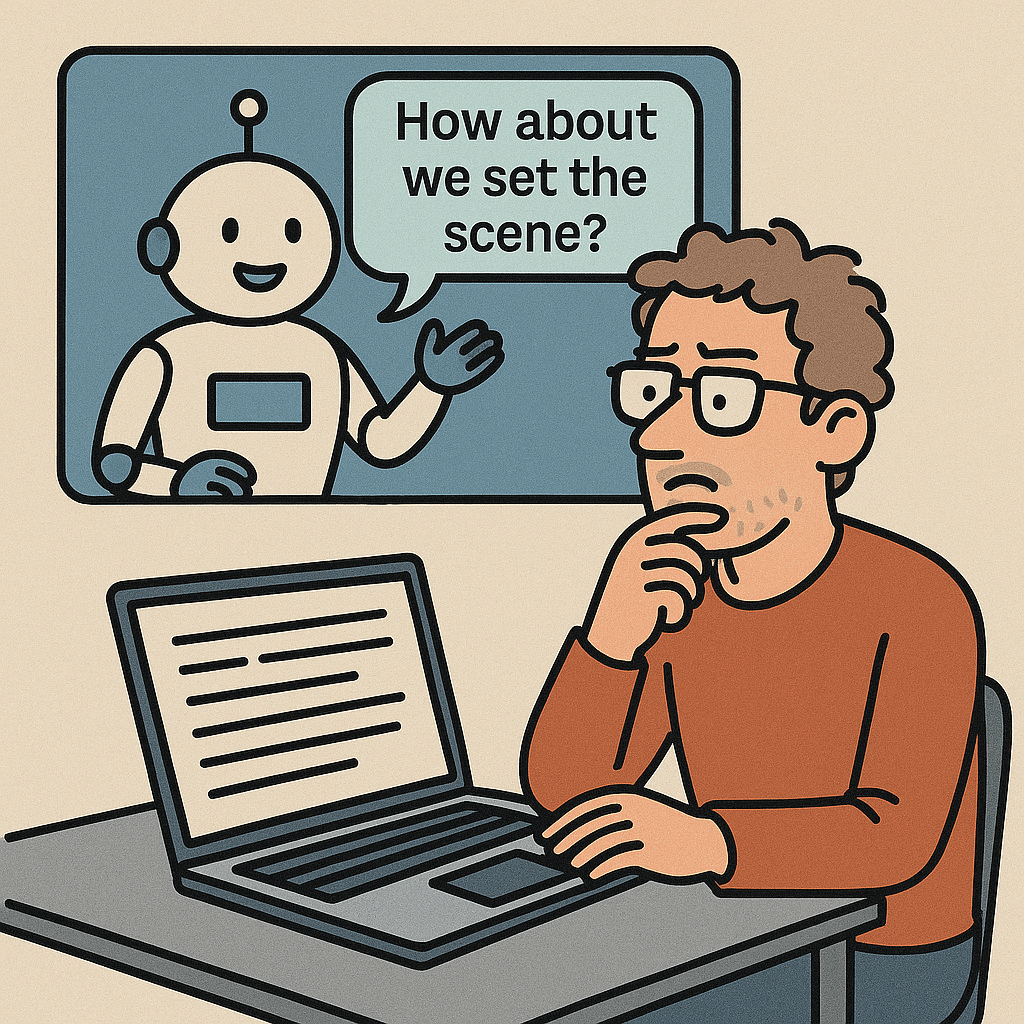
If you’re a writer in 2025, chances are you’ve workshopped a scene online, uploaded a chapter to a critique group, or asked an AI assistant to help smooth out your dialogue. That’s modern writing life. But every so often, an author (me included!) gets that little whisper of worry: Am I putting my unpublished work at risk by sharing it online?
I first worried about this a few years ago when I would post entire chapters of my WIP at the time (Nothing Really Bad Will Happen) to the Family History Writers FaceBook group. Research at that time assured me my work was safe.
Maybe safe from FB using my work, but that wouldn’t prevent someone from copying my chapters and creating content in their own name. Even though it was a private group, and I trusted all the members, I stopped posting the chapters. As you will read later, there are other things to consider.
I decided to create this post to share a few of those issues.
1. Remember: Copyright Is Already Yours
In the U.S. and many other countries, your words are automatically copyrighted the moment you write them down. You don’t have to file anything for your ownership to “count.” Registering with the Copyright Office gives you extra legal muscle if you ever need to sue, but day-to-day, your rights are already in place.
2. Keep Multiple Backups
A writer’s nightmare? Losing your only draft to a crashed hard drive. Keep at least two copies in different places—your computer and an external drive, or the cloud plus a thumb drive. Bonus points if you label versions clearly: Novel_v5.docx is a lot easier to find than “new new FINAL draft.docx.

3. Know the Difference Between Workshopping and Publishing
Posting a scene in a private critique group, or pasting a paragraph into a writing tool for feedback, does not count as publishing. Sharing full chapters in a public forum (like a blog or an open Facebook group)? That can sometimes be seen as “prior publication,” which matters if you plan to query traditional publishers.
I hadn’t considered that before. We can’t know the future—maybe you will decide to go the traditional publishing route someday. or perhaps you’ll enter your work in a contest.
If you share big chunks online—even in private groups—accept that there’s always some risk of plagiarism. The safest bet is to limit how much you share publicly until after publication.”
4. Share Wisely
When you do send drafts out:
- Use trusted people or groups.
- Add a footer with your name.
- Consider watermarks if you’re really cautious.
It’s not paranoia—it’s clarity. Everyone who sees your work should know who it belongs to.
5. Guard Your Digital Spaces
Strong passwords, two-factor authentication, and secure storage tools (Google Drive, Dropbox, Scrivener backups) keep your words safe from more than spilled coffee.
6. Don’t Fear Technology
Using AI tools, cloud docs, or secure writing apps won’t strip you of your rights. Think of them as modern notebooks. The key is making sure your “notebooks” don’t get left open in public.
I have asked Scripty (my AI pal) more than once, if the content I work with there is safe. The answer is always the same:
Anything you paste here is private to you—it isn’t visible to other users, and OpenAI doesn’t use your novel text to train models. The system is designed to keep your creative work safe.
I am choosing to trust. But, I am fairly certain at least one my writing friends, Lynn Broderick, is wagging her finger at her screen as she reads this!
Side Note: if you would like to learn more about ethical use of using AI, specifically as it relates to genealogy, check out the guidelines she helped create for the Coalition for Responsible AI in Genealogy.
The Bottom Line
Your words are yours, and nothing about sharing them privately changes that. Protect them with backups, know where and how you share, and you’ll be fine.
Writing is hard enough without worrying your next bestseller will vanish into the ether—or worse, get swiped. A few smart habits will keep your drafts safe while you keep writing.
Don’t let fear of theft silence you. Share smartly, protect your drafts, and keep writing.”
 deborahsholman.com
Leave a comment