Catherine Josephine Kenney Seeley
Behind the aliases, newspaper headlines, court appearances, and elaborate schemes in Countess of Cons was a real woman whose life stretched from an Irish immigrant family to the rapidly changing America of the early twentieth century.
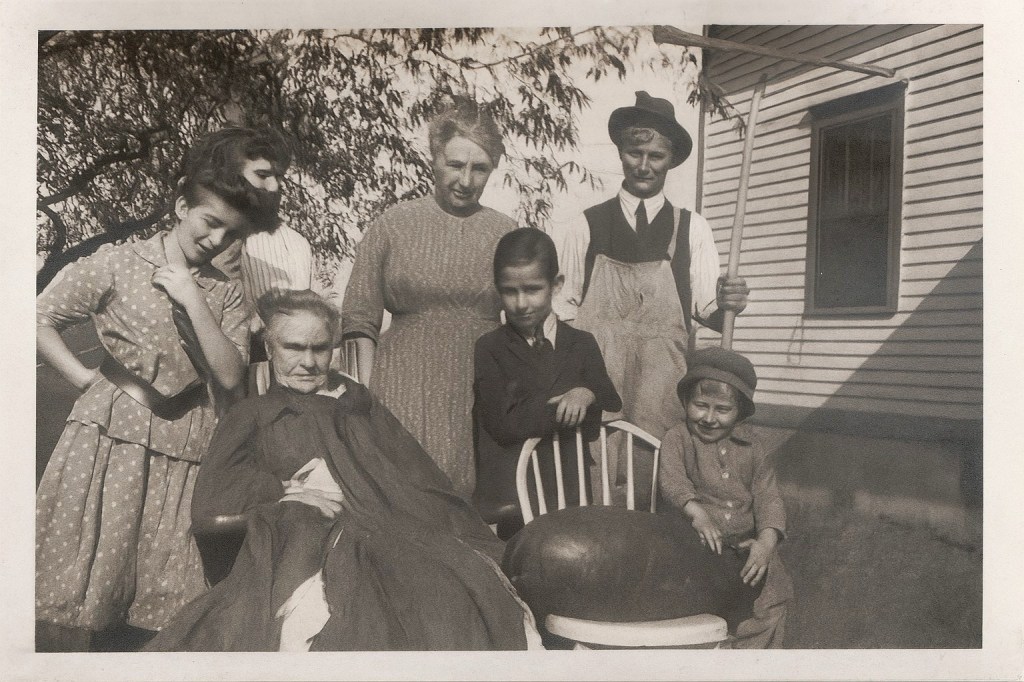
Catherine Josephine Kenney Seeley was a wife, mother, grandmother—and one of the more remarkable confidence women of the Gilded Age.
For years, my husband’s family knew only one version of Catherine: the grandmother remembered as sweet and gentle. Historical records revealed another.
Here is a closer look at the real woman behind the story.
Catherine at a Glance
Name: Catherine Josephine Kenney Seeley
Born: Probably Ireland
Died: May 1, 1916, Chicago, Illinois
Parents: Michael Kenney and Mary Allen
Daughters: Ida Seeley and Katherine “Kitty” Seeley
Husbands: William Seeley and, later, John Whitmer
Known for: A decades-long trail of aliases, frauds, confidence schemes, arrests, court appearances, and reinventions
Places connected to her story: Albany, Kansas City, Lawrence, Chicago, Brunswick, Fairfax, South Bend, St. Louis, Topeka, Wilson, and other communities across the Midwest and beyond
Her documented story spans nearly three decades—from the collapse of her marriage in the late 1880s until her death in 1916.
The Many Names of Catherine
Keeping track of Catherine can be challenging because she did not always travel under the name Catherine Seeley.
Historical records and contemporary newspapers associate her with numerous names and identities, including:
- Catherine Josephine Kenney — her birth name
- Catherine Seeley — the name she acquired through her marriage to William Seeley
- Catherine C. Fitzallen — an identity she used later in life
- Mrs. C. J. Kanley / Kenna — variations appearing during her travels and schemes
- Countess Corinna Paunceforte — perhaps her most flamboyant assumed identity
- Caroline Johns
- I. M. Mumford
- Catherine Whitmer — following her marriage to John Whitmer
Some differences in Catherine’s name resulted from ordinary spelling variations or newspaper errors. Others were intentional.
Names allowed Catherine to move into a new community with a new story—and, sometimes, to leave an old story behind.
Catherine’s Story: 1887–1916
1887–1889 — The Marriage Unravels
By 1887, Catherine’s marriage to William Seeley was collapsing. The couple separated, eventually leading to a sensational divorce trial in Kansas City in June 1889.
The newspaper account of that divorce was the document that first led me into Catherine’s story more than a century later.
It turned out to be only the beginning.
1890 — Lawrence, Kansas
Within a year of the divorce, Catherine was in legal trouble in Lawrence, Kansas.
Her life after William would increasingly be marked by movement: a new place, a new opportunity, and often a new version of herself.
1892 — Another Case, More Charges
By 1892, Catherine faced another major legal proceeding involving numerous charges.
Her encounters with courts, institutions, creditors, and law enforcement were becoming a pattern rather than an isolated episode.
1895 — Chicago
Catherine surfaced at Chicago’s Palmer House, one of the city’s most famous hotels.
Hotels, boarding houses, and other temporary accommodations became recurring settings in her story. They offered precisely what reinvention required: strangers, mobility, and the opportunity to present herself without a past.
1897 — Brunswick
By 1897, Catherine’s trail led to Brunswick, Missouri, and an episode involving a babies’ home.
Her schemes were no longer merely matters of money or social pretension. They could entangle vulnerable people and have consequences far beyond Catherine herself.
1900 — Fairfax
At the turn of the century, Catherine was associated with the Cottage Hotel in Fairfax, Missouri.
Once again she established herself in a new community, created relationships, and constructed a life that could appear perfectly respectable—until it didn’t.
1901 — The Shooting and the Trunk
In February 1901 came one of the most extraordinary episodes in Catherine’s documented life: a shooting and the discovery of a trunk whose contents raised still more questions.
By this point, newspaper readers across the region were encountering Catherine through stories that seemed almost too strange to be true.
1902 — Kansas City
Another case against Catherine reached Kansas City in 1902.
The matter was ultimately continued “for want of time,” one of several episodes in which legal proceedings against Catherine ended without a final resolution.
1907 — John Whitmer
In May 1907, Catherine married John Whitmer.
The marriage did not last.
By October, Whitmer had filed for divorce. Their brief marriage provides another glimpse of Catherine’s determination to control her own money, property, circumstances, and future.
1911 — Catherine’s Will
By 1911, Catherine was thinking about what would happen to her property after her death.
Her will provides an unusually personal glimpse into her family relationships, including provisions for her daughters and granddaughter.
Among the possessions she specifically addressed were her jewelry and clothing—small details that help return Catherine from the newspaper caricature to the world of an actual family.
1916 — The Final Chapter
On April 4, 1916, Catherine added a codicil to her will.
Less than a month later, on May 1, she died in Chicago.
She had spent decades changing names, changing cities, and changing the stories she told about herself.
But Catherine’s story did not disappear.
Catherine’s Family
For all the upheaval in Catherine’s life, one thread continued through much of her story: her daughters.
Ida Seeley
Ida, Catherine’s older daughter, built an adult life that at times intersected with—and at other times stood apart from—her mother’s turbulent world.
Newspapers, census records, legal records, and other documents make it possible to follow Ida independently and see something of the life she created for herself.
Katherine “Kitty” Seeley
Catherine’s younger daughter, Katherine—known as Kitty—married John Holman in 1900.
Through Kitty, Catherine became part of the Holman family history and, generations later, part of my husband’s family story.
It was while researching that family history that I first encountered the newspaper clipping that changed everything I thought I knew about Catherine.
Family Memory and the Historical Record
One of the questions at the heart of Countess of Cons is how two apparently contradictory versions of the same woman can both survive.
Catherine’s grandchildren remembered a sweet, gentle grandmother.
Newspapers described a confidence woman, thief, fraud, and impostor.
The historical record does not require us to choose one and discard the other.
People are rarely only one thing.
The woman who deceived strangers, frustrated authorities, accumulated aliases, and repeatedly reinvented herself was also a mother and grandmother whose descendants remembered her with affection.
Understanding Catherine meant allowing both women to exist.
Explore Catherine’s Paper Trail
Want to see how Catherine’s story was reconstructed?
Visit The Research Behind Countess of Cons for a guide to the census records, newspapers, court documents, city directories, vital records, probate files, church records, and other historical sources used in researching the book.
Additional photographs, newspaper clippings, documents, and discoveries may be added to these companion pages over time.

